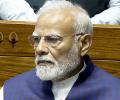
India's Minister of State for Home, Nityanand Rai, has announced a 71% decrease in terrorist incidents in the country under the Modi government. He credits a "zero tolerance" policy towards terrorism, which has resulted in no terror incidents in the hinterland. Rai also highlighted the National Investigative Agency's (NIA) successes, including the investigation of cases on foreign land and a conviction rate of 95.54%.

The Indian rupee has fallen by almost 11 per cent since August 1, thanks to rising risk aversion.

The Indian rupee continued to rule firm in the late morning session by improving five paise to 53.11 per dollar on selling of dollars by banks in view of persistent foreign capital inflows.
Tourists, businessmen and officials from India visiting Nepal are facing a new problem, following the Nepal government's ban on exchange of Indian currency in the denominations of Rs 500 and Rs 1,000.

'Growth, liquidity and deposit mobilisation are likely to be discussed during the interaction.'

Shipments of personal computers grew 3.8 per cent on a year-on-year basis to 14.4 million driven by demand for gaming and AI-powered PCs, market research firm IDC said on Monday. IDC India, South Asia and ANZ, associate vice president for devices research, Navkendar Singh said the weakening rupee can lead to an increase in device costs, which can impact the price-sensitive SMB (small and medium businesses) and consumer segments but despite all challenges, the India PC market is most likely to witness a low single-digit growth in 2025.
The Indian rupee could soon get a unique symbol, with the finance ministry holding a public competition for a design. The finance ministry, which has called for entries by April 15, would shortlist five designs. The five designers would have to make a presentation to the jury members, before a final decision is announced. But even if the design was not selected, the five shortlisted entries would be entitled to a prize of Rs 25,000 each.
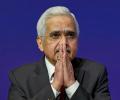
The highlights of RBI's bi-monthly monetary policy announced by Governor Shaktikanta Das:

In a major anti-narcotics operation, the Indian Coast Guard (ICG) seized a vessel with six Myanmarese crew carrying 6,000 kg of contraband Methamphetamine near Andaman and Nicobar Islands, an official said on Monday.
Indian expatriates in the United Arab Emirates have demanded a compensation package from the Indian government as the appreciation of the Indian rupee had impacted their remittances back home. The demand follows a study conducted recently by the Centre for Socio-economic and Environmental Studies, Kochi, which had focused on the impact of rupee appreciation on the economy of Kerala.

Prime Minister Narendra Modi received a tri-services ceremonial welcome in Colombo, Sri Lanka, marking the first time such an honor has been bestowed upon a foreign leader. The welcome took place at the historic Independence Square, the venue for national day celebrations. Modi's visit comes as Sri Lanka shows signs of recovery from a recent economic crisis, with India playing a significant role in providing assistance. During the visit, both leaders are expected to discuss a range of issues, including defense cooperation, energy, and digital initiatives.

'We are not asking for incentives, but at least taxation can be aligned such that the rupee tax on consumers remains the same.'
Firms whose imports are in dollar denominated currencies are the major beneficiaries. Companies, which are being hurt the most with the rising rupee, are those whose revenues are generated in dollars and whose costs are denominated in rupees. A million rupee question (rather than a million dollar) is what strategies the Indian firms should adopt to make their business sustainable.

India is among the three least-favoured Asian stock markets, according to BofA Securities whose survey found that 10 per cent of fund managers are underweight on Indian equities from a 12-month perspective.

From the 30-share blue-chip pack, Tata Steel, NTPC, Kotak Mahindra Bank, IndusInd Bank, Power Grid, Zomato, Adani Ports, Asian Paints, Mahindra & Mahindra and Reliance Industries were among the biggest laggards. Titan and Sun Pharma were the only gainers.

The liquidity deficit in the banking system crossed Rs 2 trillion again on Monday, despite the second instalment of cash reserve ratio (CRR) reduction coming into effect from December 28.

A theory that is doing the rounds is that with election nearing, this depreciation of the rupee will allow politicians of all hues to bring back their ill-gotten wealth.

After a brutal selloff since October, foreign portfolio investor (FPI) flows for the year-to-date (YTD) in 2024 have turned negative. In early September, YTD FPI investments peaked at a record Rs 22,000 crore ($2.6 billion). This wave of selling has also pulled down benchmark indices, with the Nifty's YTD returns declining to 11 per cent from their high of 21 per cent in September.

Led by Josh Hazlewood, RCB produced a dominant bowling performance to crush Chennai Super Kings by 50 runs.

Several leading scientists, academicians, and agriculturalists have called for raising government support for research and development to make Indian agriculture future-ready.

The currency market won't care for our moans, groans, cries and sighs. The rupee will find its own level, explains Tamal Bandyopadhyay.

'To the believers of crypto regulations, I have only one question to ask, how will you regulate it?'

The central government and the Reserve Bank of India have devised a country-specific plan towards implementation of overseas trade in rupee, people aware of the matter said. To start with, a small number of banks will be allowed to manage cross-border transactions in domestic currency with a particular country. "Small countries that are dollar-deficient have shown interest in doing trade in rupee.

In an eventful week ahead, stock market investors will take cues from major events like the US Federal Reserve's interest rate decision, the upcoming Union Budget and Q3 earnings, analysts said.

Using credit or debit cards abroad can prove costly.

A higher opening in the domestic equity market and the strengthening of euro and yen against the dollar overseas also aided the rupee, dealers said.

Information technology (IT) stocks ended at their lowest in nearly nine months after a fresh bout of selling, triggered by concerns over a recession in the US, the key market for domestic software exporters. A report by Morgan Stanley citing risks to growth also weighed on sentiment.

All sectoral indices ended lower. BSE Telecommunication tanked 2.18 per cent, metal (1.77 per cent), auto (1.70 per cent), energy (1.64 per cent), oil & gas (1.59 per cent), commodities (1.39 per cent) and financial services (1.37 per cent) were the major laggards.
"It is a great honour to be a part of India's history," said an excited Udaya while speaking with rediff.com.

'The irony of this country is that the party in Opposition and the party in power both depend on Muslims.'
Like the American dollar and British pound sterling, the new symbol of Indian rupee will also be available in the computers by merely downloading a software provided free by the government.
The Indian rupee will bounce from its record low level of close to Rs 52 against the greenback and will gain about 10 per cent in 12 months once overseas borrowings resume, Goldman Sachs has said.
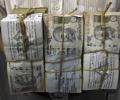
It fell 11 per cent in 2013, its third successive annual loss.
Government and Reserve Bank to take steps to arrest the fall of the currency.

Stock market participants would track global trends and foreign investors' trading activity in a holiday-shortened week ahead, amid lack of any major domestic trigger in sight, analysts said. Equity markets will remain closed on Wednesday for Christmas.

The Indian rupee recovered by four paise to 54.99 after touching all-time low of 55.07 against the American currency in the late morning trade due to mild selling of dollars by banks following following measures taken by RBI to curb the local currency's fall.

Food budgets in urban areas spent less on protein as compared to beverages and processed foods, reveals the Household Consumption Expenditure survey data for 2023-24.

The rupee dropped on renewed demand for the American currency.
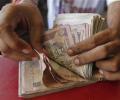
The rupee had lost 21 paise on Tuesday's trade.

'What's sad today is that there are so many people who cannot find work, not because the country is devoid of that opportunity, but because we are not doing enough in the country.'
